Comparing and Contrasting Religion in the Modern World with Christianity
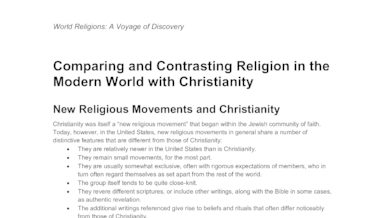
This short handout compares and contrasts several key ideas and beliefs in Christianity and religion in the modern world.
This short handout compares and contrasts several key ideas and beliefs in Christianity and religion in the modern world.
This guided meditation communicates the Gospel message of simple living in a way that engages the imagination and inspires young people to actively simplify their lives. This activity is an excerpt from the book Justice and Service Ideas for Ministry …
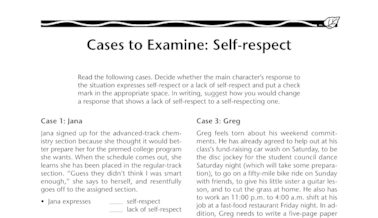
This handout provides three situations where teenagers are not fully respecting themselves. Students read the situations and respond with suggestions that demonstrate more self-respect.


This video is a song based on a Scripture verse about loving one another.
The video talks about how we can change the world in a positive way.

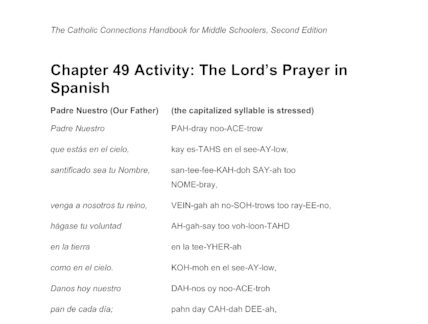
This video is a dramatization that helps explain the meaning of the different parts of the Lord's Prayer.

This video is an example of the video you can create with the children for an additional activity.

This video is the song and lyrics to "Lovely Noise" and can be used with hand motions.

This is a video of the song "Happy" and can be used as an engage activity for the lesson.

This song, illustrated in child-friendly animation, uses the story of the 5 loaves and 2 fishes to show that Jesus can work great things through us when we surrender our lives to him. Please note: YouTube comments, ads, and suggested …

This video is a catchy song based on Jesus, the Good Shepherd, that children can learn.
This video is an animated retelling of the Parable of the Prodigal Son.
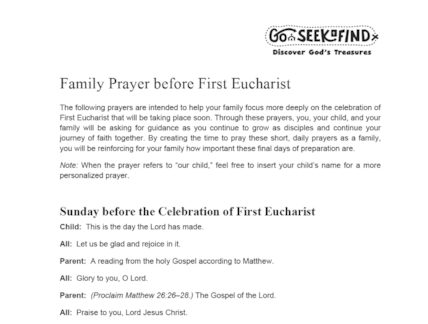
These prayers will help your family focus more deeply on the celebration of First Eucharist that will take place soon. Through these prayers, you, your child, and your family will ask for guidance as you continue to grow as disciples …
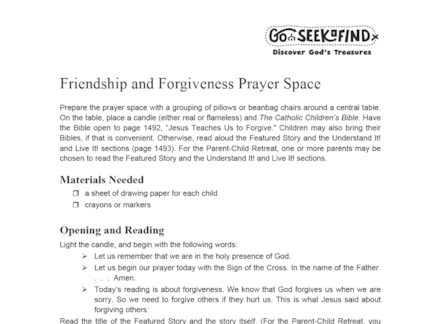
An activity, including a discussion and a craft, on forgiving friends and family members, based on The Catholic Children’s Bible featured story “Jesus Teaches Us to Forgive”, Matthew 18:21–35.
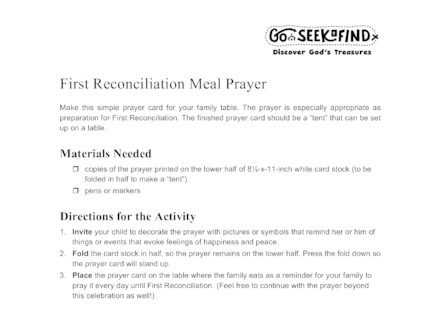
Make this simple prayer card for your family table. The prayer is especially appropriate as preparation for First Reconciliation.
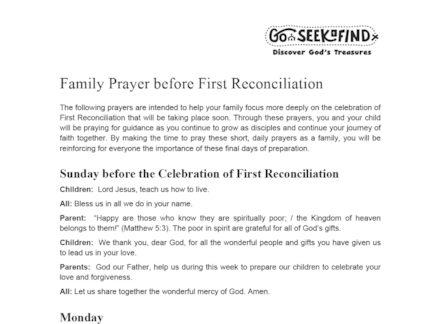
These prayers are intended to help your family focus more deeply on the celebration of First Reconciliation that will take place soon. You and your child will pray for guidance as you continue to grow as disciples and continue your …
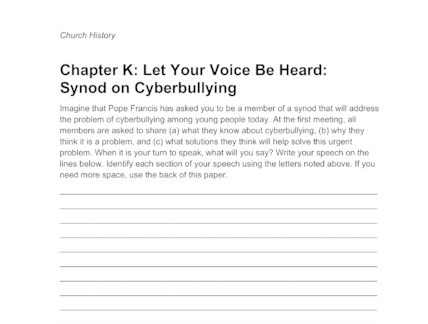
Students are challenged to write a speech as if they were a member of Pope Francis’ synod addressing the problem of cyberbullying.
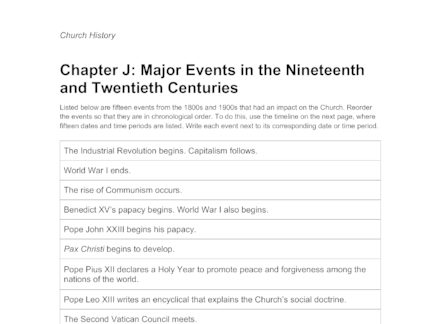
Students order important events from the 19th and 20th centuries.
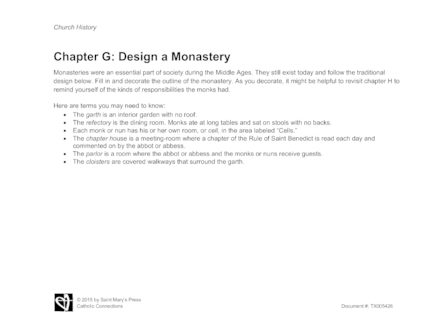
Students design a monastery based on the responsibilities and needs of the monks.
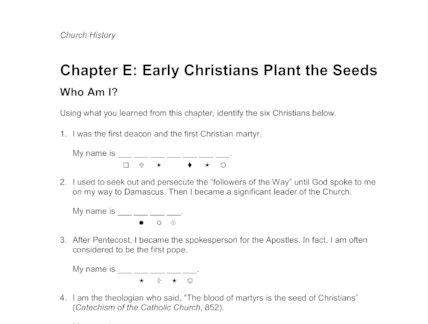
On this worksheet, students solve clues to list the names of important early Christians. These answers are then used to decode a secret message.
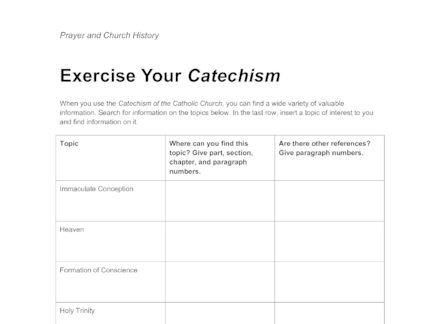
This handout guides students as they become familiar with searching for information in the Catechism of the Catholic Church.
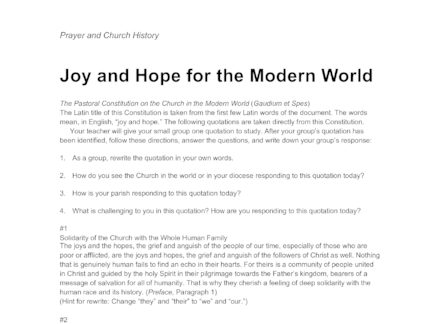
This handout provides questions for students to reflect on and answer as they read quotations from this Constitution.
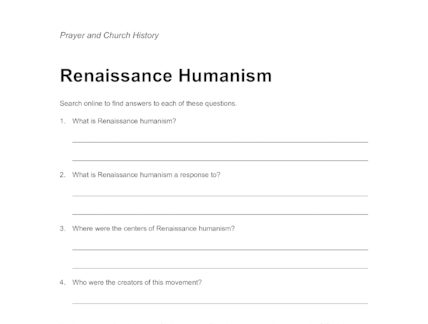
This handout provides questions for students to research on the Internet about Renaissance Humanism.
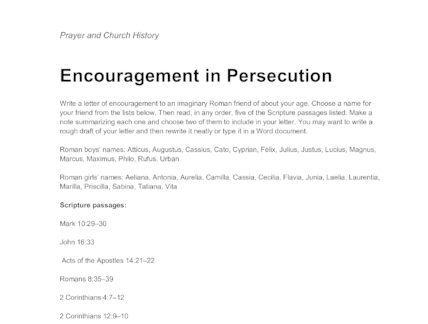
This handout outlines a writing assignment in which students write a letter to an imaginary Roman friend who is enduring persecution in the Empire. Students must use Scripture passages to help them in the writing process.
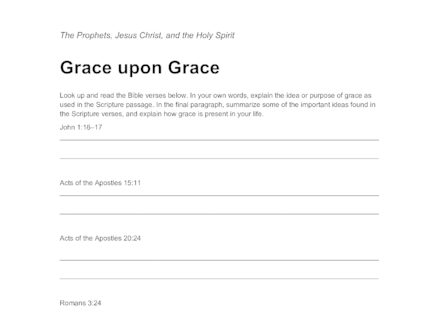
Students look up and read several passages about grace. The worksheet asks students to identify the purpose of grace in each and summarize the ways grace is present in their own lives.
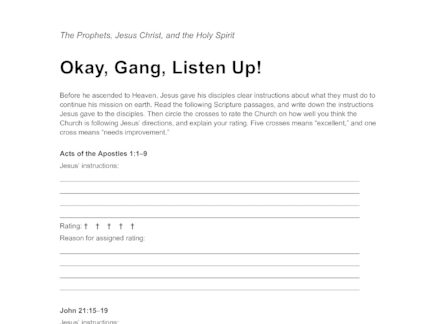
Students look up and read several passages that highlight Jesus’ instructions to his disciples. This worksheet then challenges students to reflect on how well the Church is following the instructions today.
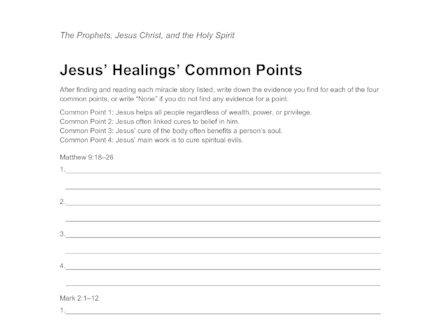
Students look up and read several miracle stories from the New Testament before identifying common points between them.
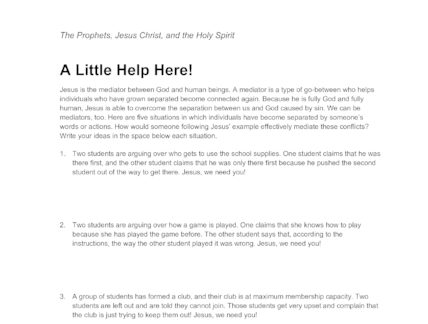
After reading several real-life examples of conflict, students provide suggestions to mediate each situation.
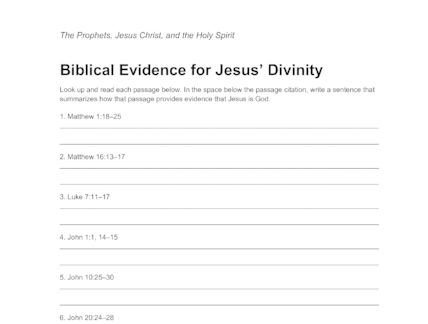
Students look up, read, and examine Scripture passages that provide evidence that Jesus is God.
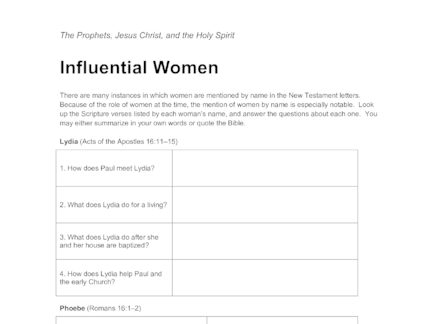
Students look up, read, and answer questions about Scripture passages that note influential women in the New Testament.
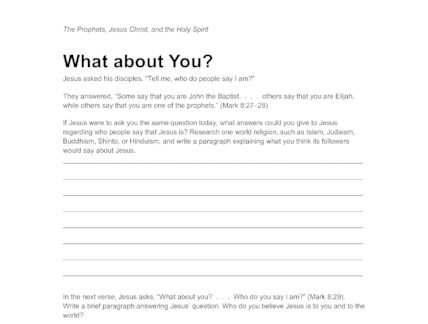
After reading Mark 8:27-29, students must answer several questions about who Jesus is to today’s world and people.
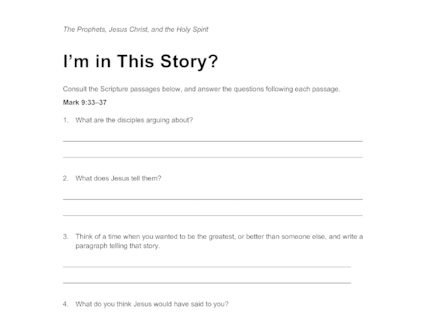
Students must look up several Scripture passages that give insight into the disciples of Jesus. This worksheet poses questions that help make Jesus’ mission relatable to students.
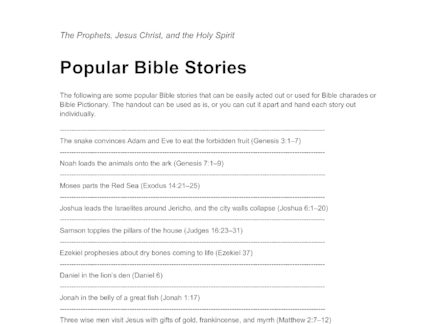
This handout provides a list of Scripture passage that can be used for games and to review well-known Bible stories.
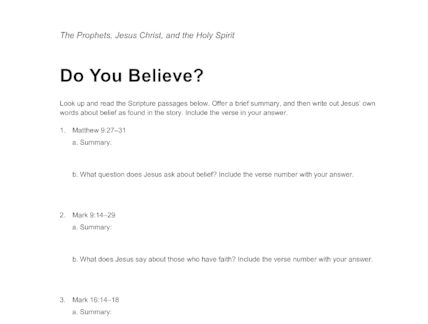
For this worksheet, students look up Scripture passages that examine the words and beliefs of Jesus in each story.
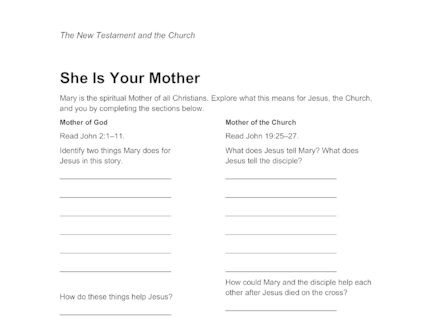
As students complete this worksheet, they will explore what it means when we say that Mary is the Mother of God and the Mother of the Church.
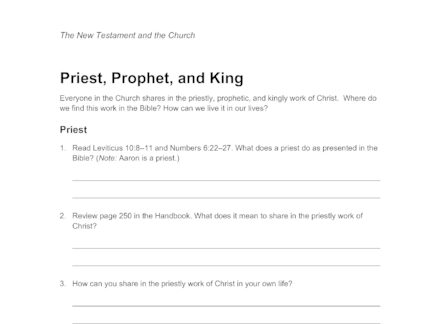
Students find examples in the Bible of the priestly, prophetic, and kingly work of Christ before applying it to their own lives.
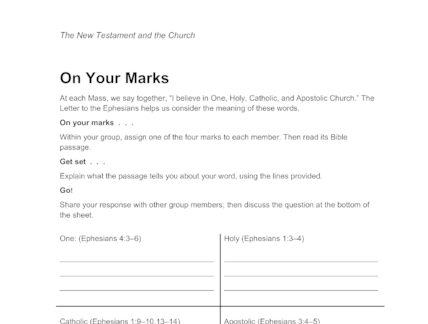
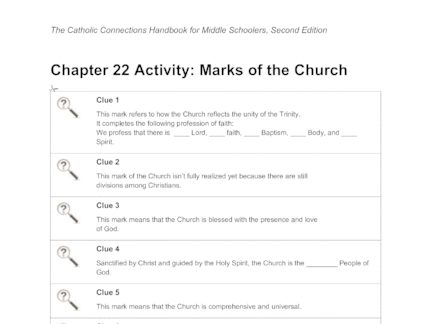
This worksheet guides group members to work together as they identify the importance of the church being “One, Holy, Catholic, and Apostolic”.
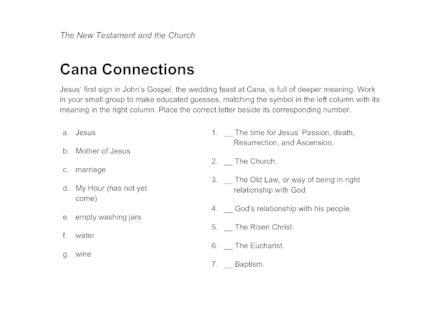
Students match symbols from Jesus’ first miracle the wedding feast in Cana with their meaning and significance.
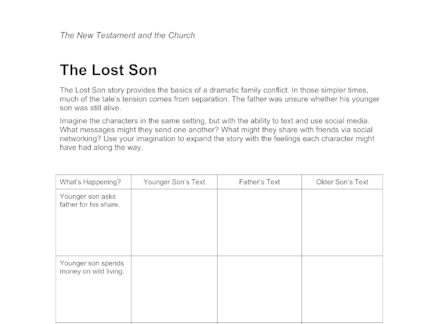
On this worksheet, students retell the story of the Prodigal Son using texting and social media messages.
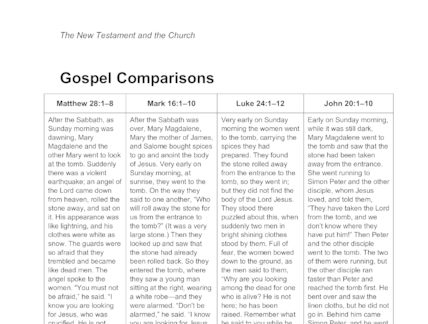
On this worksheet, students read all four Gospel accounts of the resurrection before identifying similarities and differences between them.
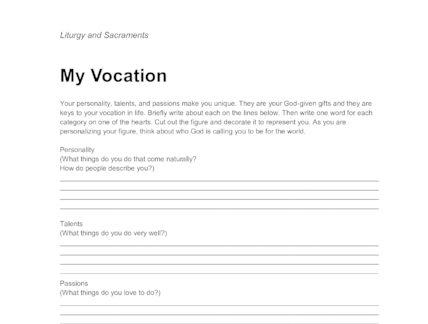
This handout helps students identify their talents, gifts, and personality and how these fit into God’s vocation for their lives.
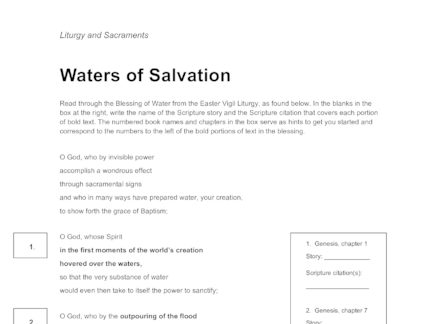
On this worksheet, students identify the Scripture passages associated with the various parts of the Blessing of the Water used at the Easter Vigil.
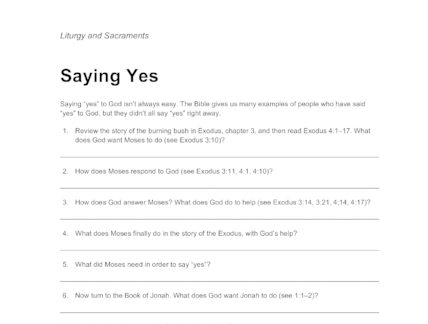
This handout guides students to examine several Scripture passages exemplifying what it means to say “yes” to God’s call.

This handout provides each element of the Eucharistic Prayer on a separate card for students to arrange in order.
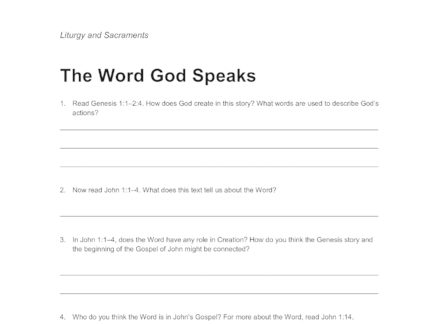
This worksheet helps students to explore the meaning of “the Word” in John’s Gospel and throughout Scripture.
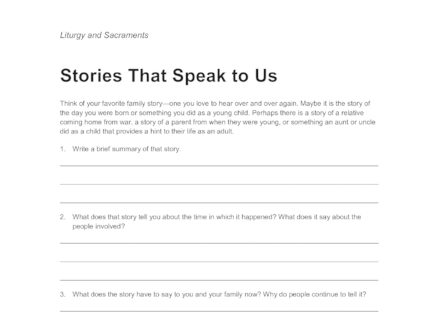
This handout guides students to recognize the importance of stories, both in our families and our faith.
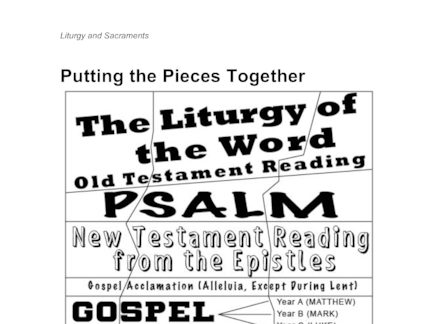
This puzzles helps students to identify and order the parts of the Liturgy of the Word.
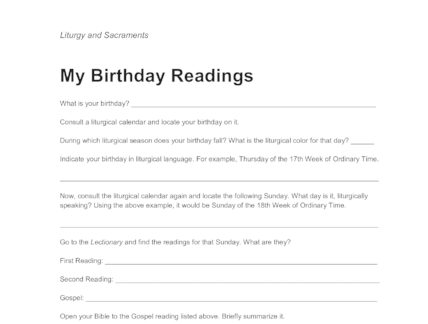
Students identify the liturgical season in which their birthday falls. This worksheet then guides them to identify and summarize the readings for that day.
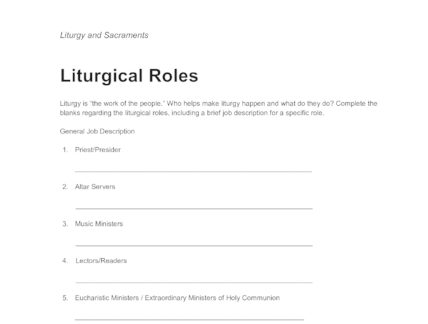
This handout asks students to identify the role of the various liturgical ministers at Mass.
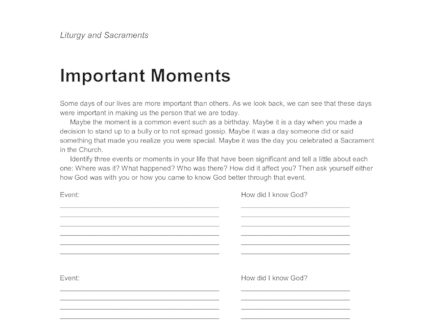
This handout asks students to think about and reflect on moments in their life that have been significant.
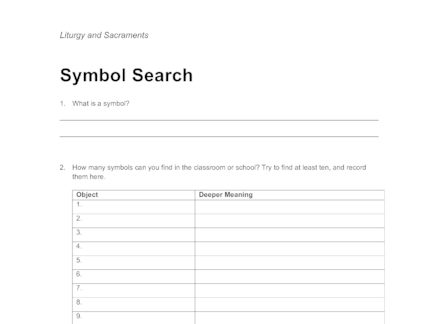
This handout challenges students to find symbols in their classroom or school and identify the deeper meaning of each.
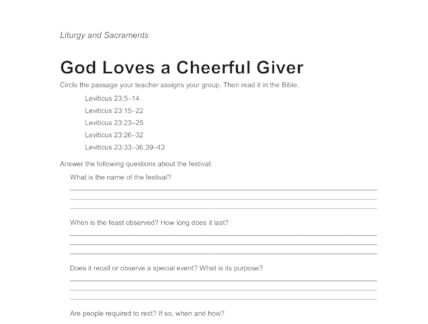
This worksheet guides students to read and answer questions about a specific Hebrew festival from the book of Leviticus.
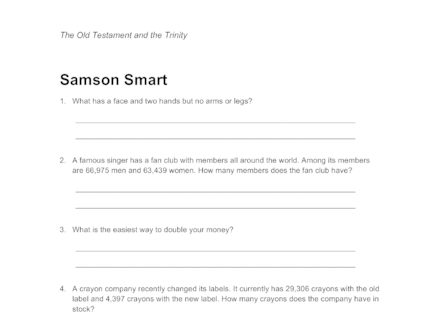
This is a set of riddles to challenge students as they learn about Samson in the Old Testament.
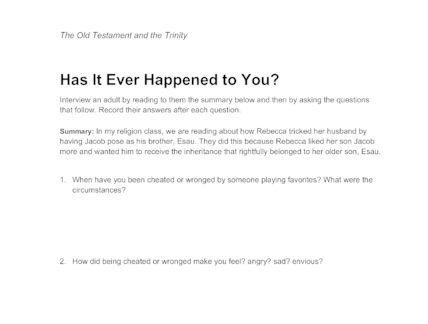
This is a set of interview questions to find out about an adult’s experience of being cheated or wronged.
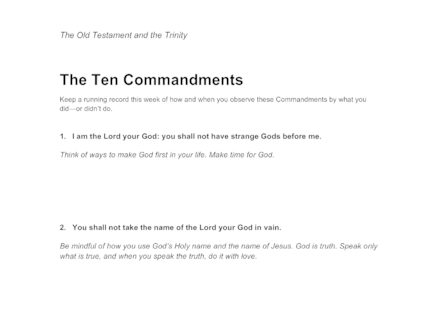
This handout asks students to keep a running record of how they observe the Ten Commandments in their actions throughout a week.
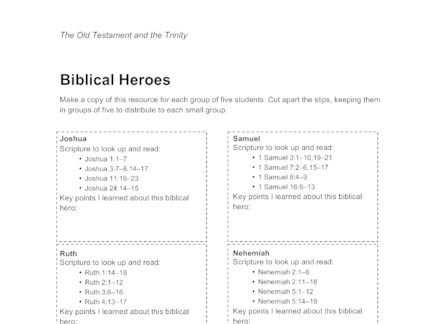
This handout assigns groups to read Scripture passages to learn about a specific biblical hero.
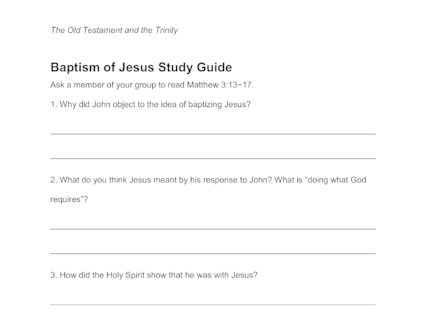
This study guide helps students reflect on the story of Jesus’ Baptism.
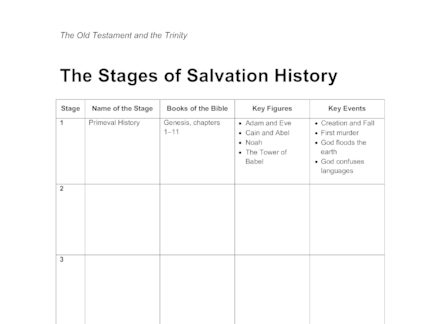
This chart allows students to organize information about the stages of salvation history.
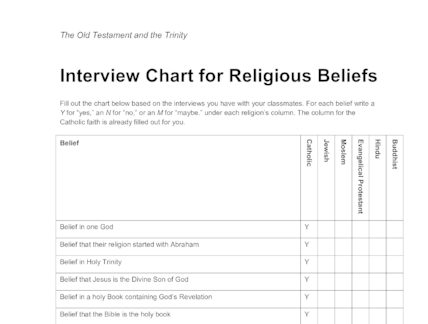
This chart allows students to see the comparison between the beliefs of five major religions and those of the Catholic Church.
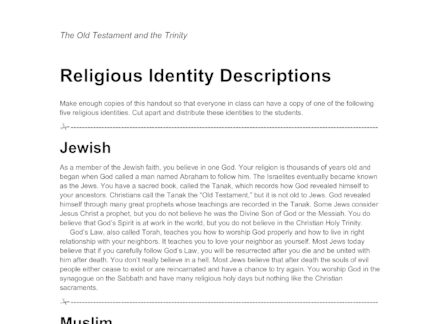
This handout provides the religious identities for five major world religions.
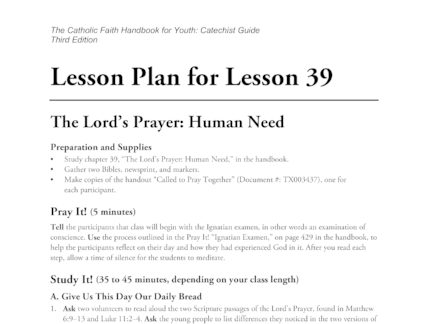
A lesson plan for lesson 39 in The Catholic Faith Handbook for Youth: Catechist Guide.
A lesson plan for lesson 38 in The Catholic Faith Handbook for Youth: Catechist Guide.
A lesson plan for lesson 37 in The Catholic Faith Handbook for Youth: Catechist Guide.
A lesson plan for lesson 34 in The Catholic Faith Handbook for Youth: Catechist Guide.
A lesson plan for lesson 27 in The Catholic Faith Handbook for Youth: Catechist Guide.
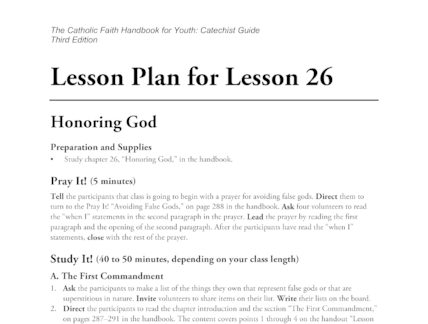
A lesson plan for lesson 26 in The Catholic Faith Handbook for Youth: Catechist Guide.
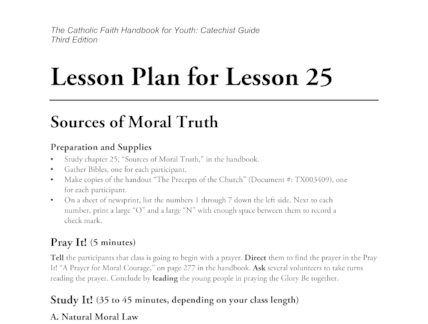
A lesson plan for lesson 25 in The Catholic Faith Handbook for Youth: Catechist Guide.
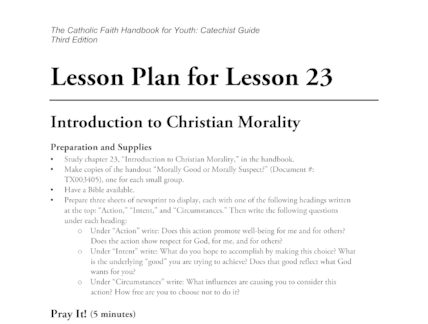
A lesson plan for lesson 23 in The Catholic Faith Handbook for Youth: Catechist Guide.
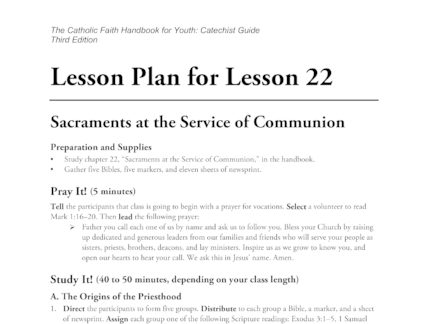
A lesson plan for lesson 22 in The Catholic Faith Handbook for Youth: Catechist Guide.
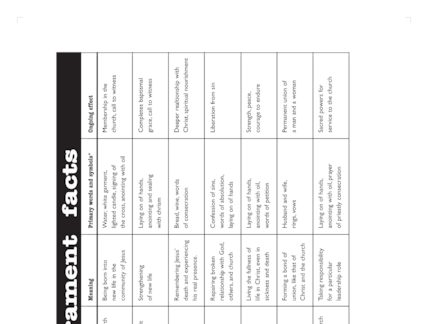
A lesson plan for lesson 21 in The Catholic Faith Handbook for Youth: Catechist Guide. In this lesson students explore the sacraments of healing.
A lesson plan for lesson 20 in The Catholic Faith Handbook for Youth: Catechist Guide.
A lesson plan for lesson 19 in The Catholic Faith Handbook for Youth: Catechist Guide.
A lesson plan for lesson 18 in The Catholic Faith Handbook for Youth: Catechist Guide.
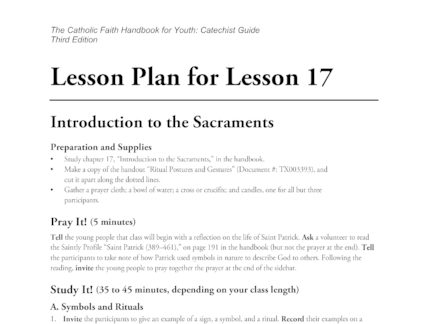
A lesson plan for lesson 17 in The Catholic Faith Handbook for Youth: Catechist Guide.
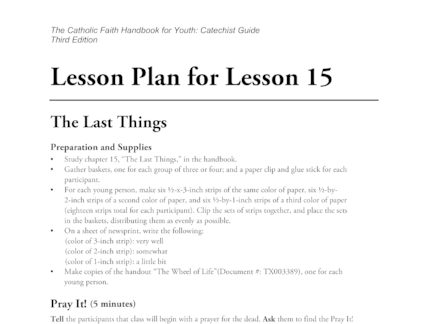
A lesson plan for lesson 15 in The Catholic Faith Handbook for Youth: Catechist Guide.
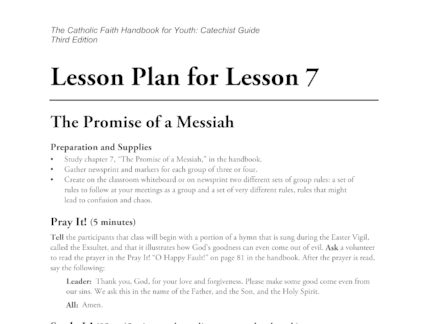
A lesson plan for lesson 7 in The Catholic Faith Handbook for Youth: Catechist Guide.
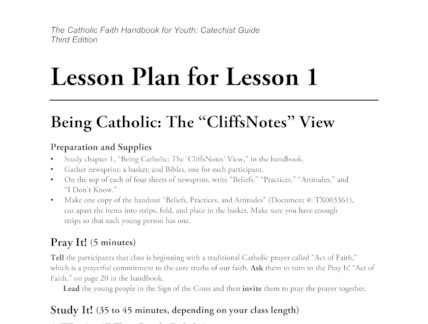
A lesson plan for lesson 1 in The Catholic faith Handbook for Youth: Catechist Guide. This lesson plan challenges students to identify why they are Catholic and the core beliefs, practices, and attitudes of Catholicism
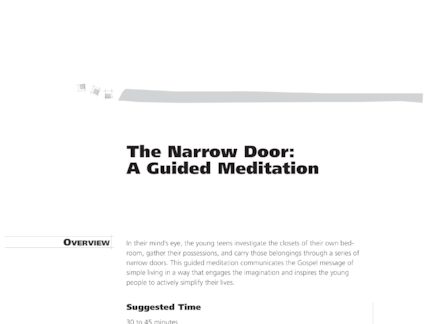
This guided meditation communicates the Gospel message of simple living in a way that engages the imagination and inspires young people to actively simplify their lives. This activity is an excerpt from the book Justice and Service Ideas for Ministry …
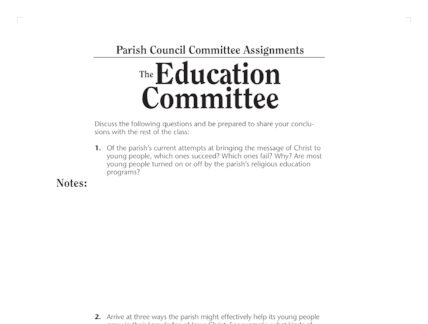
This handout assigns students to a made-up Parish Council Committee. Students must then brainstorm ideas and activities to help engage young people in the life of the parish.
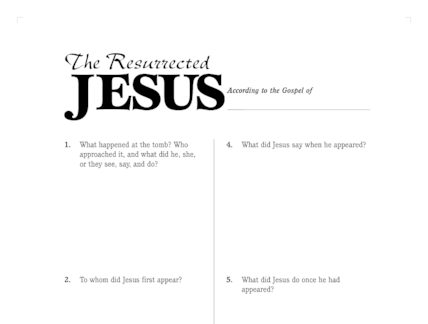
Students answer questions about the story of Jesus' Resurrection from one of the four Gospels.
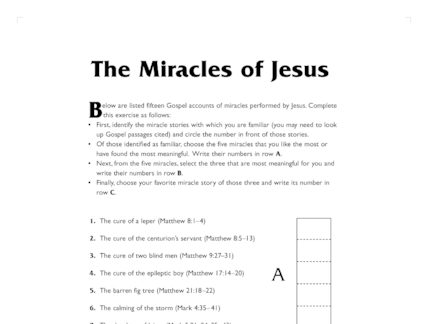
Students review many familiar miracles performed by Jesus in the gospels before choosing a favorite.
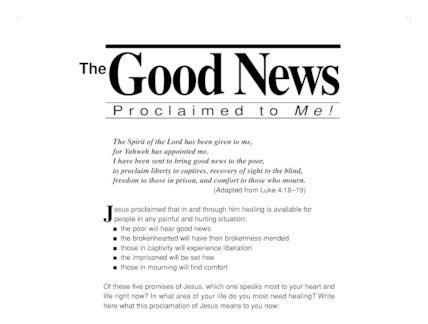
This handout asks students to reflect and write about the ways that Jesus' healing is needed in their lives.
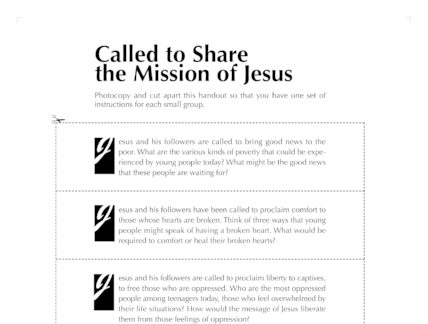
This small-group activity provides each group with an example of Christ's mission. Groups must answer questions surrounding their particular example.
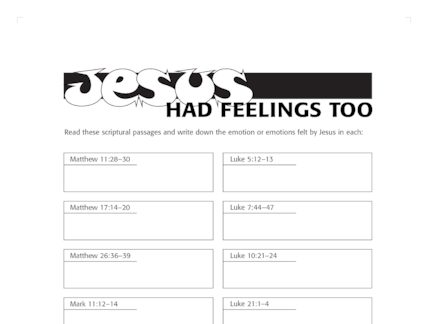
Students read passages from the Gospels to explore the numerous emotions that Jesus experienced during his time on Earth.
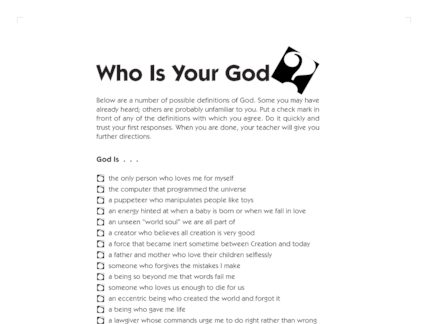
This handout presents a list of different definitions and identities for God. Students are asked to choose ones that resonate with them.
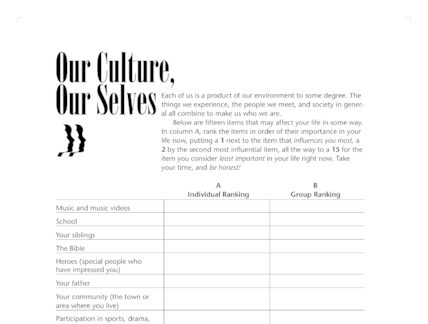
This handout asks students to rank a list of items in life and society according to their importance.
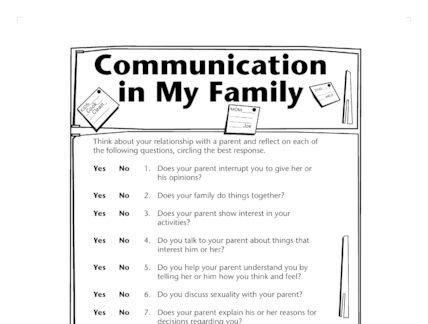
This handout helps students to explore the communication and relationship they have with their parents by asking a series of reflective questions for students to answer.
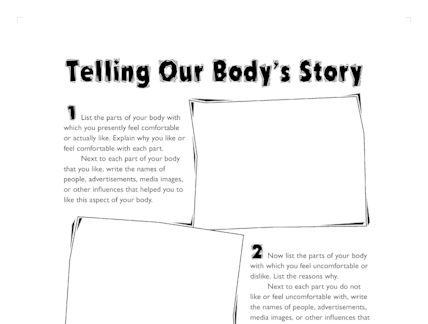
This handout helps teens reflect on their body image and the influences on their attitudes towards their bodies.
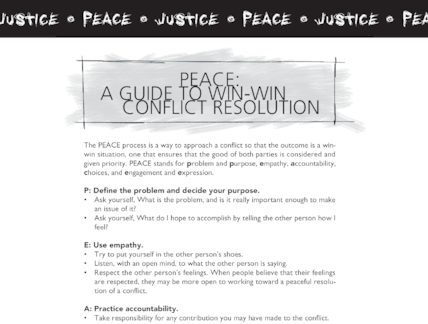
The PEACE process is a way to approach a conflict so that the outcome is a win- win situation, one that ensures that the good of both parties is considered and given priority. PEACE stands for problem and purpose, empathy, …
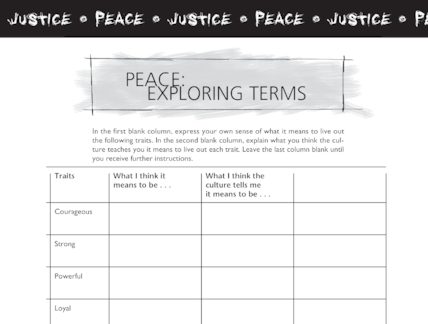
In the first blank column, express your own sense of what it means to live out the following traits. In the second blank column, explain what you think the culture teaches you it means to live out each trait. Leave …
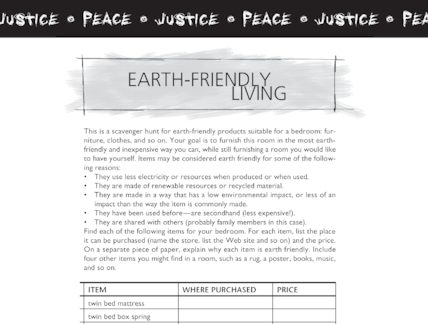
This is a scavenger hunt for earth-friendly products suitable for a bedroom: furniture, clothes, and so on. Your goal is to furnish this room in the most earth- friendly and inexpensive way you can, while still furnishing a room you …
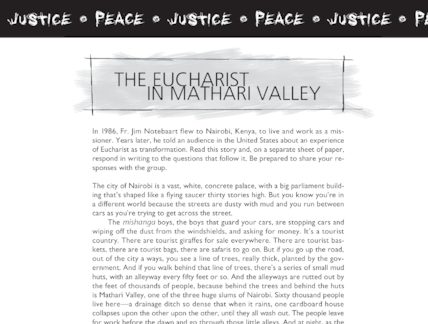
In 1986, Fr. Jim Notebaart flew to Nairobi, Kenya, to live and work as a missioner. Years later, he told an audience in the United States about an experience of Eucharist as transformation. Read this story and, on a separate …
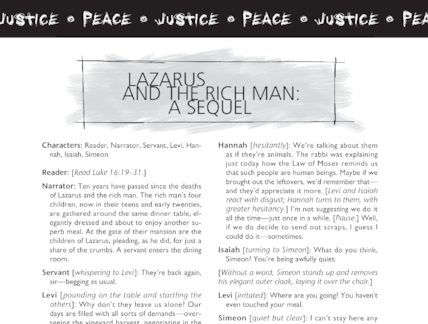
Characters: Reader, Narrator, Servant, Levi, Hannah, Isaiah, Simeon.
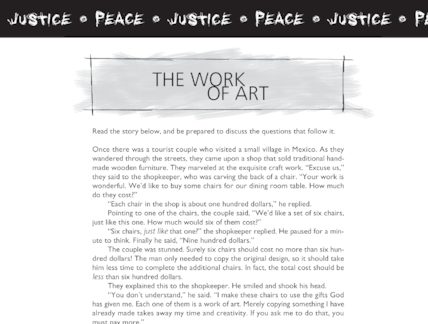
Read the story below, and be prepared to discuss the questions that follow it.
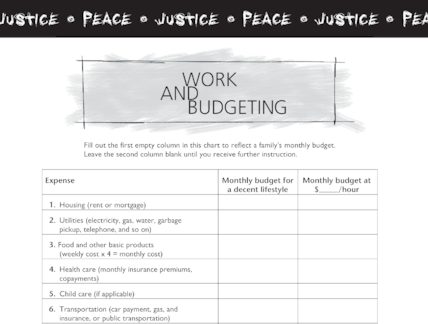
Fill out the first empty column in this chart to reflect a family’s monthly budget. Leave the second column blank until you receive further instruction.
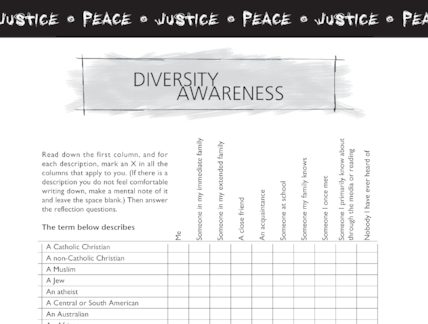
Read down the first column, and for each description, mark an X in all the columns that apply to you. (If there is a description you do not feel comfortable writing down, make a mental note of it and leave …
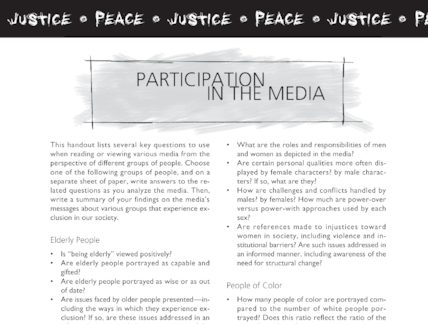
This handout lists several key questions to use when reading or viewing various media from the perspective of different groups of people. Choose one of the following groups of people, and on a separate sheet of paper, write answers to …
Develop a paper that tells your life story. Use any of the following questions, which may help you to develop a greater sense of who you are, where you have come from, and where you want to go.
A relationship map provides a blueprint for justice—it reveals the conditions and relationships that are necessary to build a just situation. The following are steps to follow when creating a relationship map. To aid in understanding the steps, we will …
An activity where students are given the opportunity to imitate the prophetic model by observing the world around them and attempting to interpret injustices.
The Incarnation, a core doctrine of Christianity, states that in Jesus Christ, God became fully human while remaining fully divine. In the Gospel of John, chapter 1, verses 1 through 18, we see one of the earliest expressions of that …
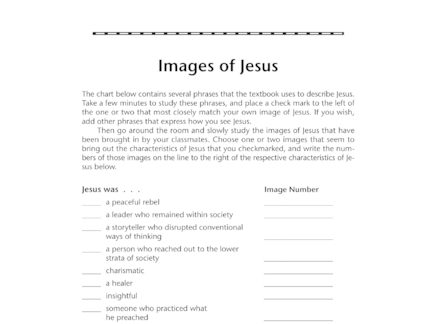
The chart below contains several phrases that the textbook uses to describe Jesus. Take a few minutes to study these phrases, and place a check mark to the left of the one or two that most closely match your own …
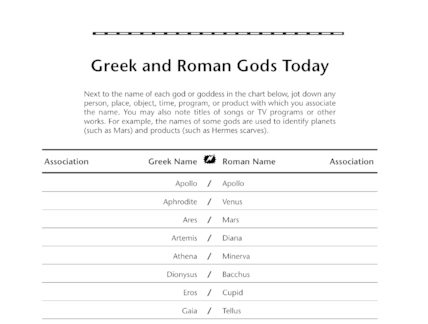
Next to the name of each god or goddess in the chart below, jot down any person, place, object, time, program, or product with which you associate the name. You may also note titles of songs or TV programs or …
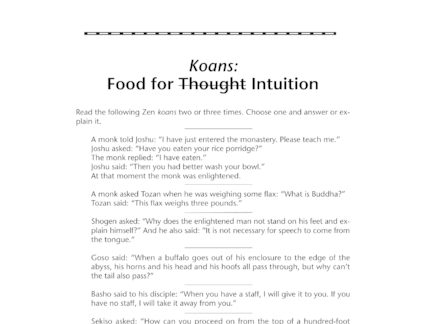
Read the following Zen koans two or three times. Choose one and answer or explain it.

Working alone or with classmates, identify what is being described in each of the following riddles.
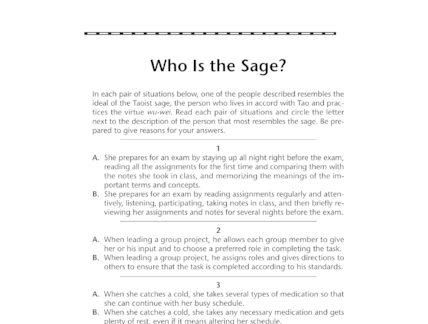
In each pair of situations below, one of the people described resembles the ideal of the Taoist sage, the person who lives in accord with Tao and practices the virtue wu-wei. Read each pair of situations and circle the letter …
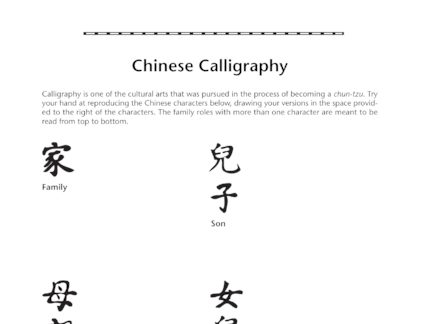
Calligraphy is one of the cultural arts that was pursued in the process of becoming a chun-tzu. Try your hand at reproducing the Chinese characters below, drawing your versions in the space provided to the right of the characters. The …
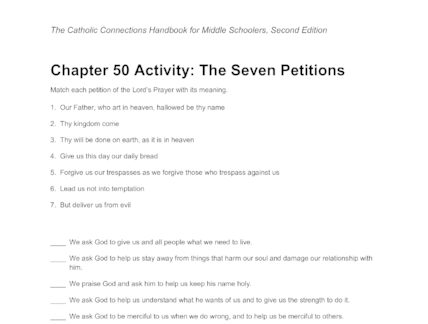
Match each petition of the Lord’s Prayer with its meaning.
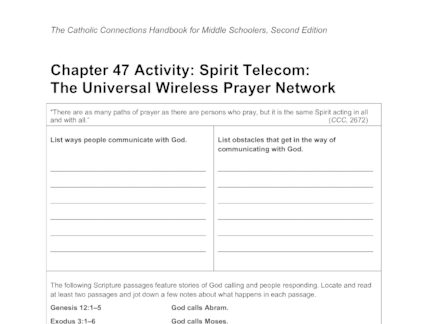
The following Scripture passages feature stories of God calling and people responding. Locate and read at least two passages and jot down a few notes about what happens in each passage.
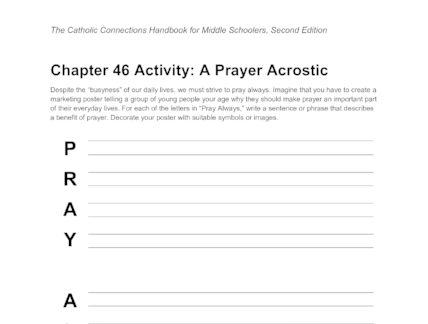
Despite the “busyness” of our daily lives, we must strive to pray always. Imagine that you have to create a marketing poster telling a group of young people your age why they should make prayer an important part of their …
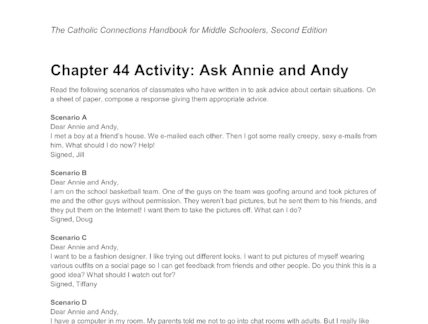
Students are asked to answer a series of “Dear Abby” style questions that deal with Internet safety.
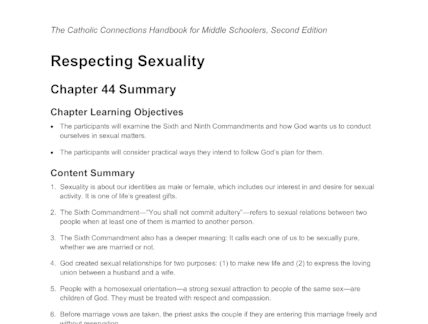
A nice summary of the Sixth and Ninth Commandments, and how God wants us to conduct ourselves in sexual matters.
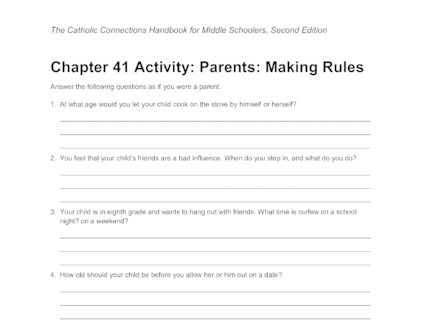
Answer the following questions as if you were a parent.

It’s not always easy to choose to do what is right, but if you listen to your conscience, you will usually know what choice you should make. For each of the following items, describe the choice you should make. Include …
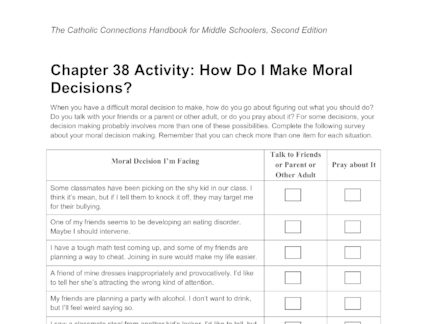
When you have a difficult moral decision to make, how do you go about figuring out what you should do? Do you talk with your friends or a parent or other adult, or do you pray about it? For some …

For each beatitude, write down how you live it in your own life.
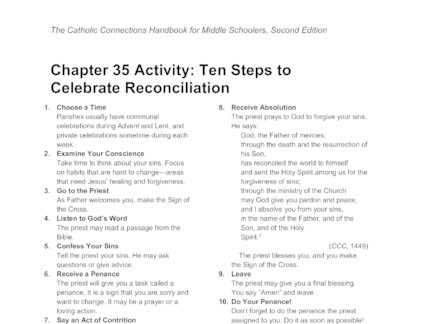
The ten steps to celebrate reconciliation.
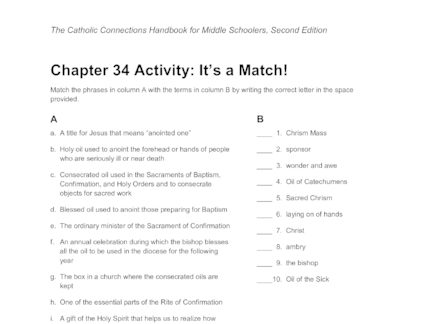
Match the phrases in column A with the terms in column B by writing the correct letter in the space provided.
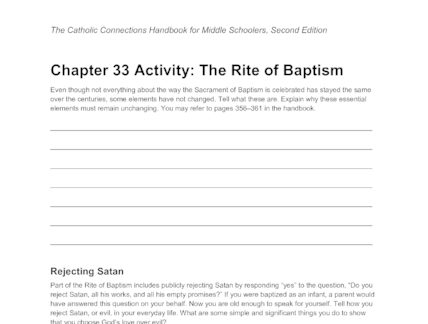
Even though not everything about the way the Sacrament of Baptism is celebrated has stayed the same over the centuries, some elements have not changed. Tell what these are. Explain why these essential elements must remain unchanging. You may refer …
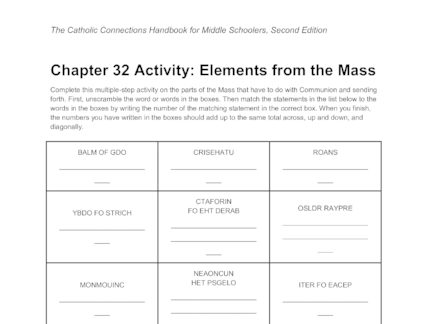
Complete this multiple-step activity on the parts of the Mass that have to do with Communion and sending forth. First, unscramble the word or words in the boxes. Then match the statements in the list below to the words in …
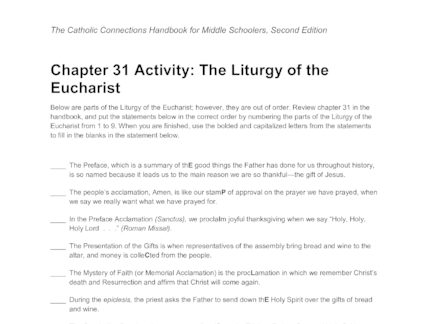
Below are parts of the Liturgy of the Eucharist; however, they are out of order. Review chapter 31 in the handbook, and put the statements below in the correct order by numbering the parts of the Liturgy of the Eucharist …
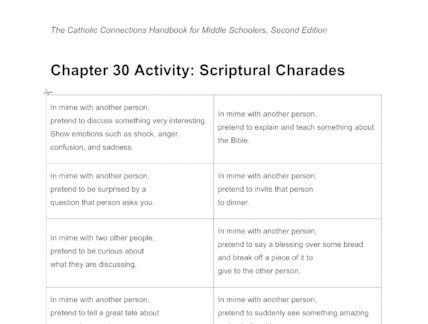
Miming different scripture passages or other actions and emotions.
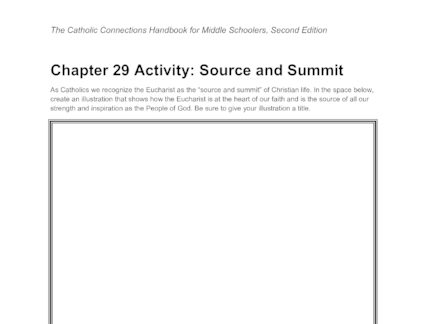
As Catholics we recognize the Eucharist as the “source and summit” of Christian life. In the space below, create an illustration that shows how the Eucharist is at the heart of our faith and is the source of all our …
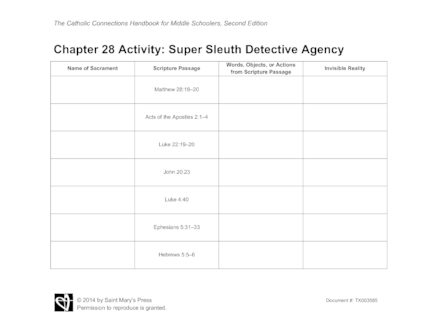
Matching Scripture passages with the Sacraments they are associated with.

As a Catholic, you probably learned from a young age some of the traditional prayers of the Church, such as the Sign of the Cross, the Lord’s Prayer, and the Hail Mary. You probably also learned about the Mass and …
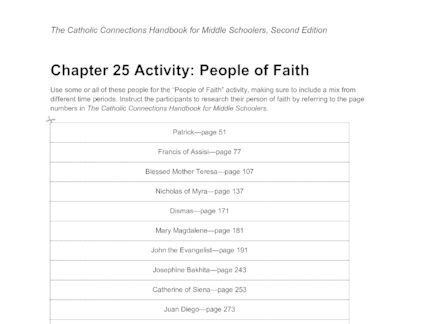
Use some or all of these people for the “People of Faith” activity, making sure to include a mix from different time periods. Instruct the participants to research their person of faith by referring to the page numbers in The …
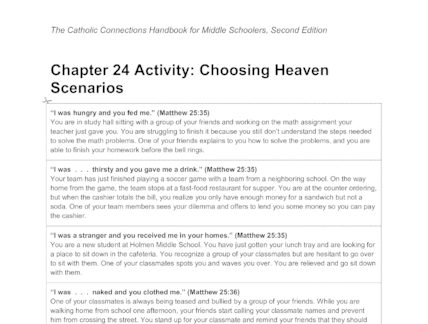
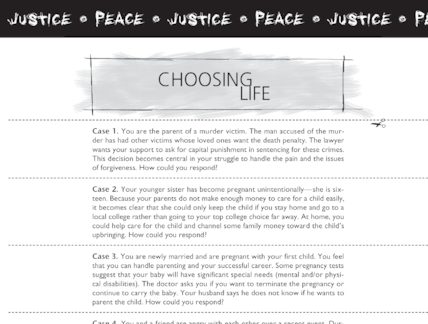
How to respond in various life issues situations.
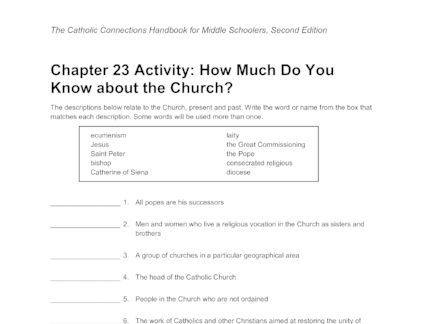
The descriptions below relate to the Church, present and past. Write the word or name from the box that matches each description. Some words will be used more than once.
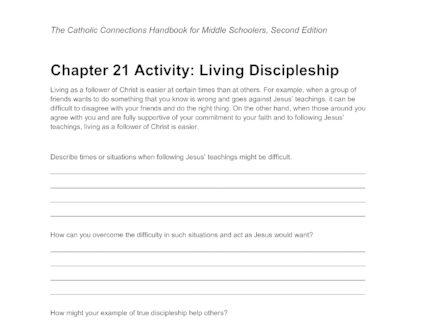
Living as a follower of Christ is easier at certain times than at others. For example, when a group of friends wants to do something that you know is wrong and goes against Jesus’ teachings, it can be difficult to …
Read the Acts of the Apostles 2:1–4 in your Bible. In the space below, create an illustration to represent one or more of the events at Pentecost.
Choose one of the following Scripture stories and read it in your Bible. In the space below, design a “Web page” containing a short news story about the event you read about. Be sure your Web page includes artwork about …
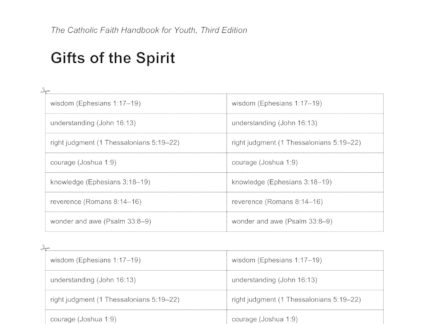
The Gifts of the Holy Spirit help us to love God. Each gives us special graces to respond to God’s call to live holy lives. Complete the names of the Gifts of the Holy Spirit, and draw a suitable symbol …
The editor of the Spirit News, a newspaper whose goal is to report how the Holy Spirit is active in the world, has asked for story ideas about ways the Holy Spirit is at work in the world. You and …
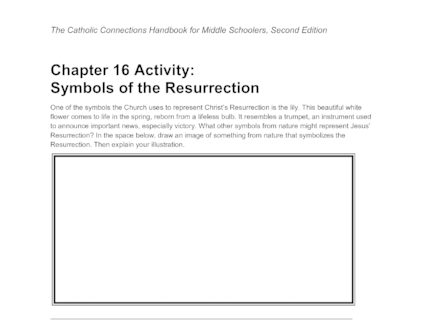
One of the symbols the Church uses to represent Christ’s Resurrection is the lily. This beautiful white flower comes to life in the spring, reborn from a lifeless bulb. It resembles a trumpet, an instrument used to announce important news, …
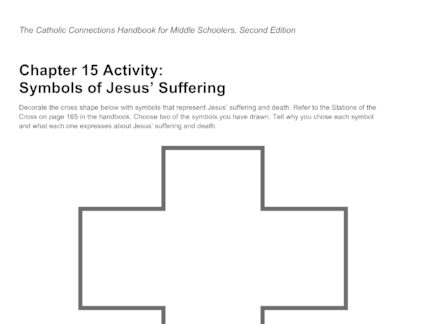
Decorate the cross shape below with symbols that represent Jesus’ suffering and death. Refer to the Stations of the Cross on page 165 in the handbook. Choose two of the symbols you have drawn. Tell why you chose each symbol …
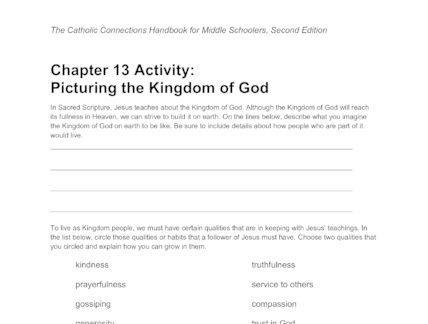
In Sacred Scripture, Jesus teaches about the Kingdom of God. Although the Kingdom of God will reach its fullness in Heaven, we can strive to build it on earth. On the lines below, describe what you imagine the Kingdom of …
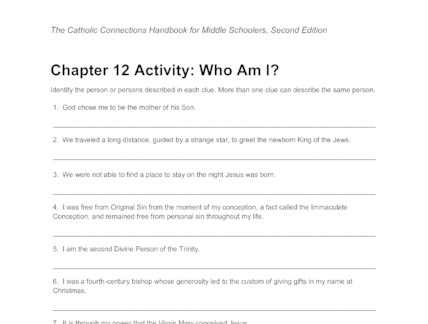
Recall times when you received unexpected good news, either of an everyday nature—such as getting a better grade than you expected on a test—or on a far bigger, perhaps life-changing, scale. Describe an example of each of these types of …
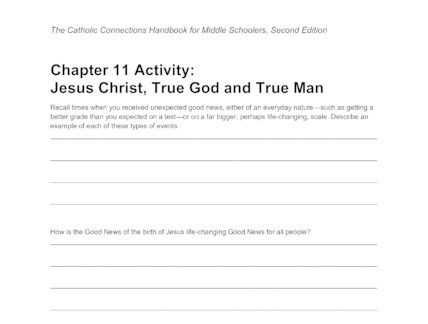
Recall times when you received unexpected good news, either of an everyday nature—such as getting a better grade than you expected on a test—or on a far bigger, perhaps life-changing, scale. Describe an example of each of these types of …
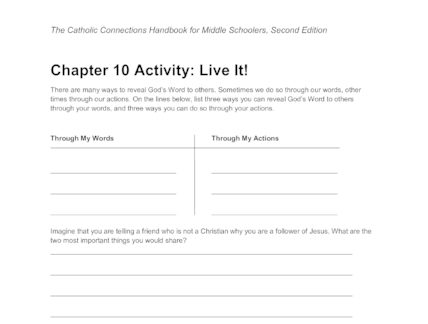
There are many ways to reveal God’s Word to others. Sometimes we do so through our words, other times through our actions. On the lines below, list three ways you can reveal God’s Word to others through your words, and …
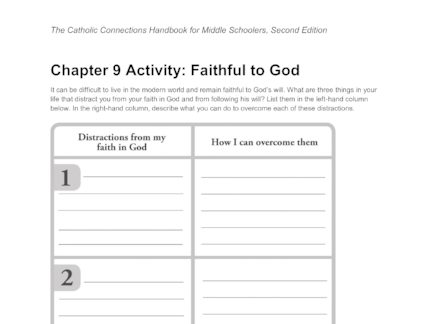
It can be difficult to live in the modern world and remain faithful to God’s will. What are three things in your life that distract you from your faith in God and from following his will? List them in the …
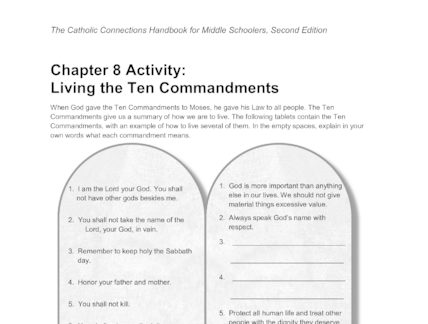
When God gave the Ten Commandments to Moses, he gave his Law to all people. The Ten Commandments give us a summary of how we are to live. The following tablets contain the Ten Commandments, with an example of how …
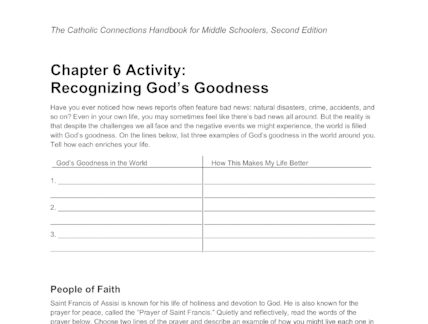
Have you ever noticed how news reports often feature bad news: natural disasters, crime, accidents, and so on? Even in your own life, you may sometimes feel like there’s bad news all around. But the reality is that despite the …
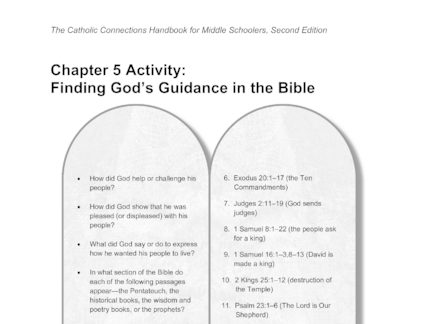
Answer the following questions and look up the scripture passages.
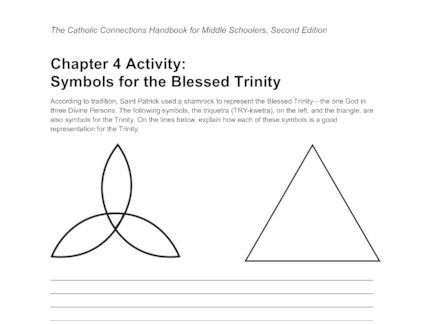
According to tradition, Saint Patrick used a shamrock to represent the Blessed Trinity—the one God in three Divine Persons. The following symbols, the triquetra (TRY-kwetra), on the left, and the triangle, are also symbols for the Trinity. On the lines …
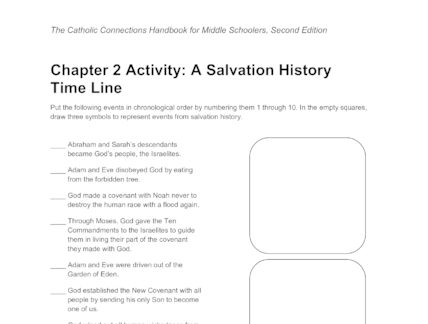
Put the following events in chronological order by numbering them 1 through 10. In the empty squares, draw three symbols to represent events from salvation history.
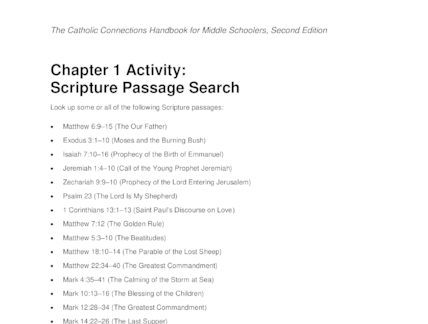
Look up some or all of the following Scripture passages.
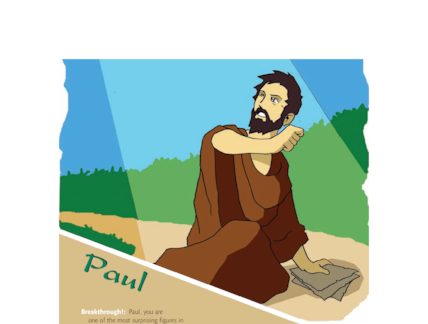
This interview with Paul is from Breakthrough! The Bible for Young Catholics. On this colorful page, Paul explains his ministry and his legacy.
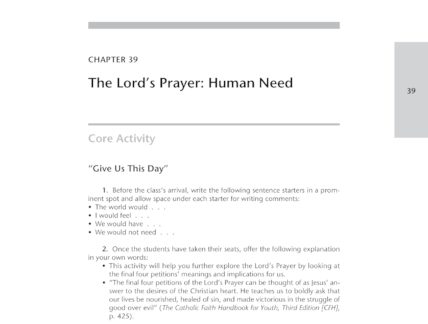
Activities for Chapter 39 The Lord’s Prayer: Human Need including a core activity, core activity extension, and additional activities.
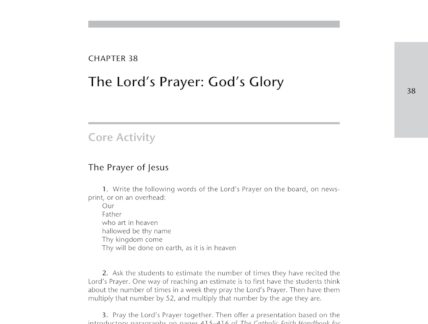
Activities for Chapter 38 The Lord’s Prayer: God’s Glory including a core activity, core activity extension, and additional activities.
Activities for Chapter 37 Praying Together including a core activity, core activity extension, and additional activities.
Activities for Chapter 36 Praying with Scripture including a core activity, core activity extension, and additional activities.
Activities for Chapter 35 Personal Prayer including a core activity, core activity extension, and additional activities.
Activities for Chapter 34 The Forms of Prayer including a core activity, core activity extension, and additional activities.
Activities for Chapter 33 Introduction to Prayer including a core activity, core activity extension, and additional activities.
Activities for Chapter 32 The Moral Life including a core activity, core activity extension, and additional activities.
Activities for Chapter 31 Respecting Truth including a core activity, core activity extension, and additional activities.
Activities for Chapter 30 Respecting Material Goods including a core activity, core activity extension, and additional activities.
Activities for Chapter 29 Respecting Sexuality including a core activity, core activity extension, and additional activities.
Activities for Chapter 28 Respecting Life including a core activity, core activity extension, and additional activities.
Activities for Chapter 27 Honoring Family including a core activity, core activity extension, and additional activities.
Activities for Chapter 26 Honoring God including a core activity, core activity extension, and additional activities.
Activities for Chapter 25 Sources of Moral Truth including a core activity, core activity extension, and additional activities.
Activities for Chapter 24 Social Justice including a core activity, core activity extension, and additional activities.
Activities for Chapter 23 Introduction to Christian Morality including a core activity, core activity extension, and additional activities.
Activities for Chapter 22 Sacraments at the Service of Communion including a core activity, core activity extension, and additional activities.
Activities for Chapter 21 Sacraments of Healing including a core activity, core activity extension, and additional activities.
Activities for Chapter 20 The Eucharist, including a core activity, core activity extension, and additional activities.
Activities for Chapter 19 Confirmation, including a core activity, core activity extension, and additional activities.
Activities for Chapter 18 Baptism, including a core activity, core activity extension, and additional activities.
Activities for Chapter 17 Introduction to the Sacraments, including a core activity, core activity extension, and additional activities.
Activities for Chapter 16 Introduction to the Liturgy, including a core activity, core activity extension, and additional activities.
Activities for Chapter 15 The Last Things, including a core activity, core activity extension, and additional activities.
Activities for Chapter 14 The Organization of the Catholic Church, including a core activity, core activity extension, and additional activities.
Activities for Chapter 13 The Mission of the Catholic Church, including a core activity, core activity extension, and additional activities.
Activities for Chapter 12 The Holy Spirit, including a core activity, core activity extension, and additional activities.
Activities for Chapter 11 Jesus’ Resurrection, including a core activity, core activity extension, and additional activities.
Activities for Chapter 10 Jesus’ Death, including a core activity, core activity extension, and additional activities.

Activities for Chapter 9 Jesus’ Message and Mission, including a core activity, core activity extension, and additional activities.
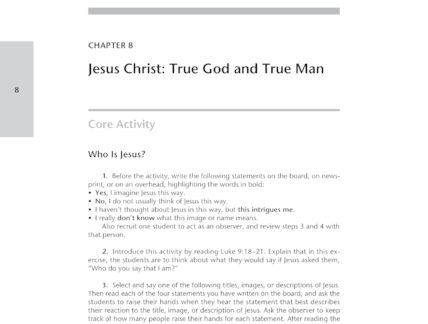
Activities for Chapter 8 Jesus Christ: True God and True Man, including a core activity, core activity extension, and additional activities.
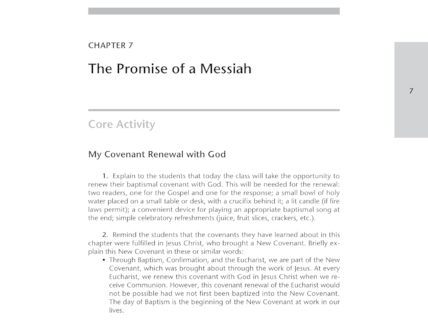
Activities for Chapter 7 The Promise of a Messiah, including a core activity, core activity extension, and additional activities.
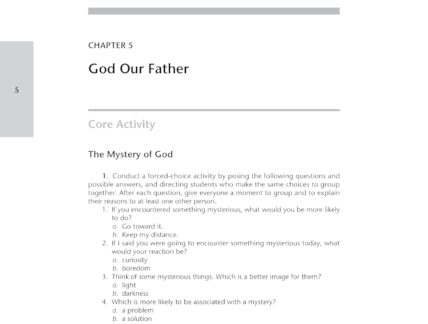
Activities for Chapter 5 God Our Father, including a core activity, core activity extension, and additional activities.
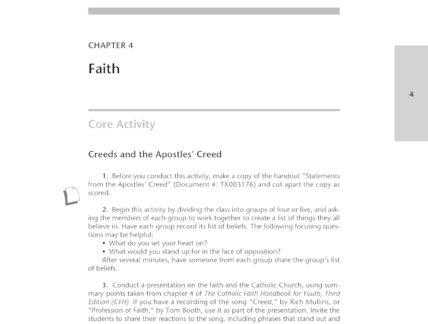
Activities for Chapter 4 Faith, including a core activity, core activity extension, and additional activities.
Activities for Chapter 3 The Bible’s Big Picture, including a core activity, core activity extension, and additional activities.
Activities for Chapter 2 Knowing God: Reason and Revelation, including a core activity, core activity extension, and additional activities.
Activities for Chapter 1: Being Catholic, including a core activity, core activity extension, and additional activities.
Scripture verses about the Church as the people of God, the body of Christ, and temple of the Spirit.
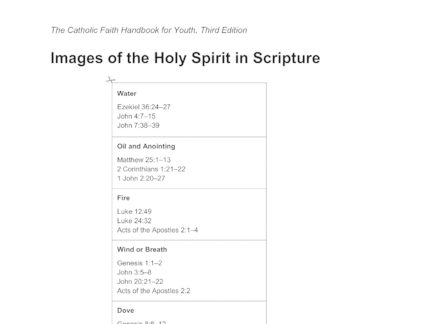
Scripture verses where the Holy Spirit appears in in different forms.
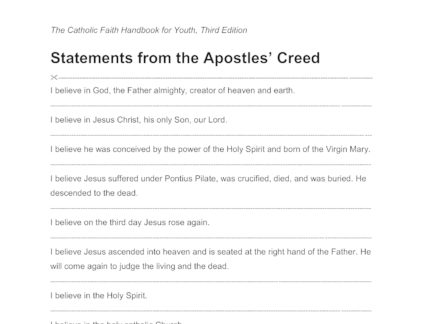
Statements from the Apostles Creed, which can be cut out.
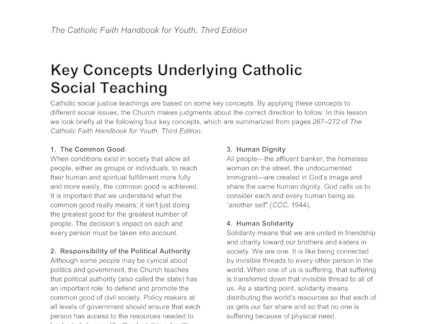
Catholic social justice teachings are based on some key concepts. By applying these concepts to different social issues, the Church makes judgments about the correct direction to follow. In this lesson we look briefly at the following four key concepts, …

Knowing that God is calling me into a vocation of service, I commit to . . . • spending one minute each day in silence, to listen to God’s voice calling to me • remaining open to whatever vocation God …
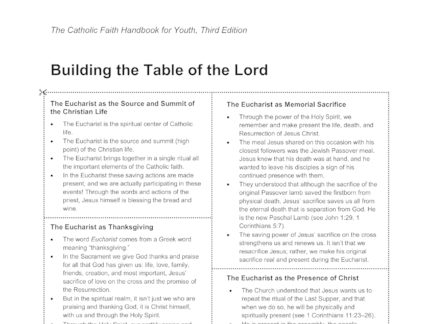
Descriptions of the Eucharist as the source and summit of Christian life, thanksgiving, memorial sacrifice, and the presence of Christ.
Copyright © 2026 Saint Mary's Press. All rights reserved. • Privacy Policy