The Twelve Virtues of a Good Teacher
About this article
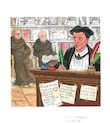
This article will introduce teachers to the twelve virtues of a good teacher, as listed in 1706 by John Baptist de La Salle (the patron saint of teachers).THE TWELVE VIRTUES OF A GOOD TEACHER
In 1706, John Baptist de La Salle, patron saint of teachers, listed twelve virtues of a good teacher in his Conduct of the Christian Schools. In 1785, Brother Agathon, the fifth superior general of the Brothers of the Christian Schools, reissued the list in a much longer letter titled The Twelve Virtues of a Good Teacher. His letter was widely distributed for many years, and even up until the 1930s, a number of Catholic colleges used it as a text in education classes.
FIRST VIRTUE OF A GOOD TEACHER: GRAVITY
A Reflection on the Virtue of Gravity
At the start of the day or during a quiet time before class, read the following statements to yourself, pausing after each to reflect on your own experiences that called for the virtue of gravity and how you might strive to more fully incorporate the virtue of gravity into your teaching style:
- A teacher possessing the virtue of gravity "is assured, . . . serene, . . . without either affectation or awkwardness, . . . keeps an affable air, . . . speaks little and uses a moderate tone of voice, . . . says nothing bitter, stinging, supercilious, crude, or offensive to anyone."
- A teacher possessing the virtue of gravity seeks "to win students' confidence, . . . to know the virtues they may possess, . . . to discern their vices and defects, in order to correct these."
In closing, reflect on the Scriptures: "Show yourself in all respects a model of good works, and in your teaching show integrity, gravity, and sound speech that cannot be censored" (Titus 2:7-8).
SECOND VIRTUE OF A GOOD TEACHER: SILENCE
A Reflection on the Virtue of Silence
At the start of the day or during a quiet time before class, read the following statements to yourself, pausing after each to reflect on your own experiences that called for the virtue of silence and how you might strive to more fully incorporate the virtue of silence into your teaching style:
- Silence is a virtue that leads the teacher to avoid speaking when she or he should not speak and to speak when she or he should not be silent. The virtue of silence "teaches the art of being silent and that of speaking opportunely. Thus it causes the teacher to avoid two opposite defects that it condemns: taciturnity [not at all talkative] and loquacity [very talkative]."
- The teacher should be convinced of that which he or she wishes to teach. "If you wish to persuade," says Saint Bernard ("On the Song of Songs," sermon 59, no. 3), "it is rather by affectionate sentiments than by studied declamations that you will succeed in this."
In closing, reflect on the Scriptures: "For everything there is a season, and a time for every matter under heaven: . . . a time to keep silence, and a time to speak" (Eccl 3:1,7).
THIRD VIRTUE OF A GOOD TEACHER: HUMILITY
A Reflection on the Virtue of Humility
At the start of the day or during a quiet time before class, read the following statements to yourself, pausing after each to reflect on your own experiences that called for the virtue of humility and how you might strive to more fully incorporate the virtue of humility into your teaching style:
- Humility makes teachers glad to share their knowledge with young people.They show great zeal in evangelizing the poor . . . and in instructing young people.
- The humility of good teachers makes them courageous. They do not turn away from whatever may be lowly and uninviting in the schools and in the students.
- Humility makes good teachers treat both their colleagues and their students with esteem, cordiality, friendliness, and kindness.
- Humility makes good teachers endure without chagrin the confusion that their mistakes, blunders, and lack of success may draw down on them.
- The humility of good teachers makes them charitable, affable, obliging, and easy to approach, especially by the poor and those whom they might find less interesting to deal with.
In closing, reflect on the Scriptures: "You must clothe yourselves with humility in your dealings with one another, for 'God opposes the proud, but gives grace to the humble'" (1 Peter 5:5).
FOURTH VIRTUE OF A GOOD TEACHER: PRUDENCE
A Reflection on the Virtue of Prudence
At the start of the day or during a quiet time before class, read the following statements to yourself, pausing after each to reflect on your own experiences that called for the virtue of prudence and how you might strive to more fully incorporate the virtue of prudence into your teaching style:
- Prudence is a virtue that makes us understand what we need to do and what we need to avoid.
- Teachers should take care to use the different elements that prudence includes:
- memory, that you apply to the future the experiences of the past
- intelligence, that you fully grasp the subject matter and know how best to impart it to your students
- docility, that you will not undertake anything of importance without consulting the experts and learning a little something yourself
- skill, that you carry out a project or lesson in a way that insures the success of what you undertake
- reasoning, that you reason correctly in order to avoid errors
- foresight, that you wisely arrange the means that lead to the desired end
- circumspection, that you thoroughly examine a lesson plan before using it
- precaution, that you regulate your external conduct to eliminate the possibility of blame, scandal, injustice
In closing, reflect on the Scriptures: "Therefore I prayed, and prudence was given me; I pleaded, and the spirit of Wisdom came to me" (Wisdom 7:7).
FIFTH VIRTUE OF A GOOD TEACHER: WISDOM
A Reflection on the Virtue of Wisdom
At the start of the day or during a quiet time before class, read the following statements to yourself, pausing after each to reflect on your own experiences that called for the virtue of wisdom and how you might strive to more fully incorporate the virtue of wisdom into your teaching or parenting style:
- Wisdom is a virtue that gives you knowledge of the most exalted things through the most excellent principles so that you may act accordingly.
- To instruct young people with greater benefit, wisdom requires that you practice the virtues that you want to cultivate in your students.
- Lead your students to choose rightly and to persevere in every enlightened choice.
- Help your students fulfill their obligations and works toward God, toward themselves, and toward others.
In closing, reflect on the Scriptures: "If any of you is lacking in wisdom, ask God, who gives to all generously and ungrudgingly, and it will be given you. But ask in faith, never doubting" (James 1:5-6).
SIXTH VIRTUE OF A GOOD TEACHER: PATIENCE
A Reflection on the Virtue of Patience
At the start of the day or during a quiet time before class, read the following statements to yourself, pausing after each to reflect on your own experiences that called for the virtue of patience and how you might strive to more fully incorporate the virtue of patience into your teaching or parenting style:
- Patience is a virtue that helps you overcome, without murmuring and with submission to the will of God, all the trials of this life, especially the cares inseparable from the education of young people.
- Patience prevents all outbursts during trying occasions.
- Opposed to the virtue of patience are offensive, crude words; rough, harsh language; violent or excessive actions; and unjust punishments.
- Patience soothes your pains and calms your mind; it banishes spells of sadness; it forbids bitter words, spiteful remarks, ill humor, discouragement, worry, unreasonable over-eagerness, bustle, and haste.
In closing, reflect on the Scriptures: "And we urge you, beloved, to admonish the idlers, encourage the fainthearted, help the weak, be patient with all of them" (1Thessalonians, 5:14).
SEVENTH VIRTUE OF A GOOD TEACHER: RESERVE
A Reflection on the Virtue of Reserve
At the start of the day or during a quiet time before class, read the following statements to yourself, pausing after each to reflect on your own experiences that called for the virtue of reserve and how you might strive to more fully incorporate the virtue of reserve into your teaching or parenting style:
- Reserve is a virtue that helps you think, speak, and act with moderation, discretion, and modesty.
- Reserve consists in controlling yourself in circumstances that might lead you to grow angry or upset.
- Reserve requires you to act everywhere and at all times in consideration of the innocence of the children, their impressionability, and their tendency to act up.
- Reserve is acquired by cultivating a balanced view of things, by moderating your desires and fears, and by preparing ourselves for all eventualities.
In closing, reflect on the Scriptures: "Keep your heart with all vigilance, for from it flow the springs of life. . . . Keep straight the path of your feet, and all your ways will be sure" (Proverbs 4:23,26).
EIGHTH VIRTUE OF A GOOD TEACHER: GENTLENESS
A Reflection on the Virtue of Gentleness
At the start of the day or during a quiet time before class, read the following statements to yourself, pausing after each to reflect on your own experiences that called for the virtue of gentleness and how you might strive to more fully incorporate the virtue of gentleness into your teaching or parenting style:
- Gentleness is a virtue that inspires you with goodness, sensitivity, and tenderness. There are four kinds of gentleness:
- of the mind, which consists in judging without harshness, without passion, without considering your own merit and your supposed superiority
- of the heart, which makes us want things without being stubborn about it and seeks them in a righteous manner
- of your manner, which consists in behaving according to good principles without wanting to reform others over whom we have no authority
- of your conduct, which makes us act with simplicity and uprightness, not contradicting others without reasonable cause
- Gentleness restrains our fits of anger, smothers our desires for vengeance, and makes us face with a calm soul the misfortunes, disappointments, and other trials that can happen to us.
In closing, reflect on the Scriptures: "Take my yoke upon you, and learn from me; for I am gentle and humble in heart, and you will find rest for your souls. For my yoke is easy, and my burden is light" (Matthew 11:29-30).
NINTH VIRTUE OF A GOOD TEACHER: ZEAL
A Reflection on the Virtue of Zeal
At the start of the day or during a quiet time before class, read the following statements to yourself, pausing after each to reflect on your own experiences that called for the virtue of zeal and how you might strive to more fully incorporate the virtue of zeal into your teaching or parenting style:
- Zeal is a virtue that makes us bring about the glory of God with great enthusiasm and affection.
- Teach young people by imitating Jesus Christ, who began by doing before teaching. . . . The shortest path is that of example. Children learn more by seeing than by hearing.
- Next, instruct by solid teaching. . . . Teach young people those things that will enable them to know, love, and serve God.
- Finally, your zeal must be charitable and courageous; thus it makes you act with strength and gentleness--with strength because it is magnanimous and incapable of getting discouraged when encountering pains and difficulties; with gentleness because it is mild, tender, compassionate, and humble--in a word, it makes you act in the Spirit of Jesus Christ.
In closing, reflect on the Scriptures: "Do not lag in zeal, be ardent in spirit, serve the Lord" (Romans 12:11).
TENTH VIRTUE OF A GOOD TEACHER: VIGILANCE
A Reflection on the Virtue of Vigilance
At the start of the day or during a quiet time before class, read the following statements to yourself, pausing after each to reflect on your own experiences that called for the virtue of vigilance and how you might strive to more fully incorporate the virtue of vigilance into your teaching or parenting style:
- Vigilance is the virtue that makes us diligent and painstaking in fulfilling all our tasks.
- Watch over yourself, that is, over the thoughts of your mind, over the movements of your heart, over the use you make of your five senses, and over your entire person so as not to do anything except what is good.
- Only leave your classroom for a very serious necessity and always for as short a time as possible. In fact, your presence contributes much to making the students more attentive by fixing and arresting their imagination.
- Guard against a vigilance that is restless, suspicious, worried, accompanied by ill-founded conjectures, and so on. Apply vigilance peaceably, that is without agitation, trouble, constraint, or affection; it will then be all the more effective.
In closing, reflect on the Scriptures: "Keep watch over yourselves and over all the flock, of which the Holy Spirit has made you overseers, to shepherd the church of God" (Acts 20:28).
ELEVENTH VIRTUE OF A GOOD TEACHER: PIETY
A Reflection on the Virtue of Piety
At the start of the day or during a quiet time before class, read the following statements to yourself, pausing after each to reflect on your own experiences that called for the virtue of piety and how you might strive to more fully incorporate the virtue of piety into your teaching or parenting style:
- Piety is a virtue that helps you fulfill worthily your works toward God.
- You should possess the virtue of piety in an eminent degree, that is, your piety should be both interior and sincere; otherwise you would only be a hypocrite; it should also be outward and exemplary because you should show externally the sentiments that fill your heart.
- Help young people understand well the Christian and moral virtues: faith, hope, charity, justice, goodness, honesty, wisdom, prudence, fortitude, temperance, modesty in talk and in all their conduct.
In closing, reflect on the Scriptures: "Train yourself in godliness, for, while physical training is of some value, godliness is valuable in every way" (1 Timothy 4:7-8).
TWELVETH VIRTUE OF A GOOD TEACHER: GENEROSITY
A Reflection on the Virtue of Generosity
At the start of the day or during a quiet time before class, read the following statements to yourself, pausing after each to reflect on your own experiences that called for the virtue of generosity and how you might strive to more fully incorporate the virtue of generosity into your teaching and parenting style:
- Generosity is a virtue that helps you voluntarily sacrifice your personal interests to those of your neighbor, in the example of Saint Paul, who said that he was "not seeking [his] own advantage but that of many so that they may be saved" (1 Corinthians 10:33).
- Devote yourself, not momentarily but for life, to the teaching career that is no doubt most honorable in itself but also extremely laborious and tedious in nature.
- Consider teaching as the sole object worthy of your labors, of your continual application, of your cares and study; and propose to yourself to make your students derive all the benefit from your efforts so that you can say to them with the Apostle, "I will most gladly spend and be spent for you" (2 Corinthians 12:15).
In closing, reflect on the Scriptures: "It is well with those who deal generously" (Psalm 112:5).
Acknowledgments
(This article is adapted from "The Twelve Virtues of a Good Teacher," by Brother Agathon. [Landover, MD: Christian Brothers Conference, 2000]. Copyright © 2000 by the Christian Brothers Conference. Used with permission. Permission is granted for this activity to be used for classroom or campus ministry purposes. This material may not be republished in any form without written permission from Saint Mary's Press.)